Photo Credit: Tahasin Haque Rayhan
Young Voices, Big Questions: A Round-table That Put Children’s Rights in Focus
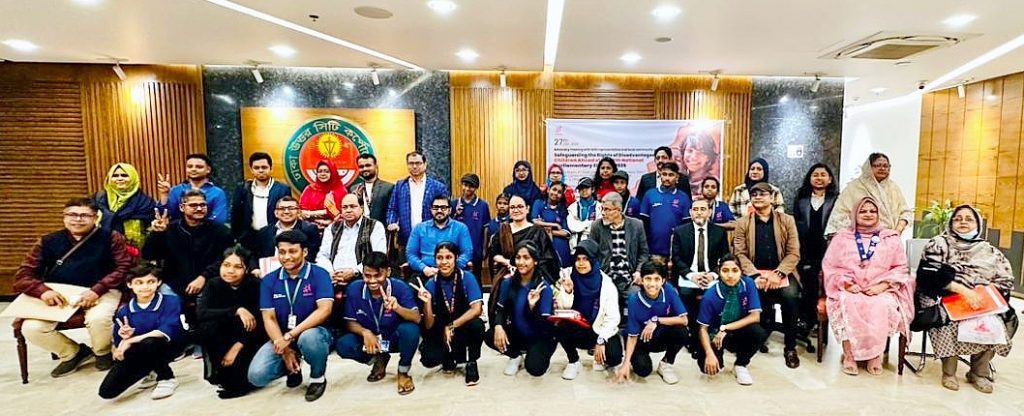
On 27 January 2026, the meeting room at Dhaka North City Corporation in Gulshan became more than a formal venue. It turned into a space where policymakers, media professionals, development actors, and young changemakers sat together with one shared concern: how to protect disadvantaged children, especially as the country moves toward the 13th National Parliamentary Election.
The advocacy roundtable, organized by LEEDO, focused on safeguarding child rights during politically sensitive times. Elections often bring tension, uncertainty, and, unfortunately, situations where children become invisible or even exploited. The discussion aimed to confront that reality directly while pushing for a more child-sensitive political environment.
One of the strongest impressions of the day came from LEEDO’s Young Journalist Changemaker Team. Their presence shifted the tone of the conversation. They asked direct questions, shared observations from their communities, and reminded everyone that these issues are not abstract policy matters; they affect real lives. Many guests openly praised their confidence and clarity, expressing hope that these young journalists will grow into powerful advocates for social change.
The conversation did not stay theoretical. Concerns were raised about children being used in political showdowns, limited access to safe playgrounds, exposure to drug networks, and recent cases of child abuse. In response, DNCC Administrator Mohammad Azaz expressed commitment to making Dhaka more child-friendly, improving access to safe public spaces, and supporting dialogue with the Election Commission to discourage political exploitation of children. A particularly encouraging promise involved facilitating a playground where LEEDO children can practice cricket ahead of the Street Children World Cup in Zimbabwe.
Media collaboration added another positive dimension. Kaler Kantho partnered with the programme and later agreed to host the young journalists for a media house visit. That step alone opens doors to real newsroom exposure, mentorship, and stronger youth participation in public discourse.
Of course, no event runs perfectly. Some logistical challenges surfaced, from last-minute attendance changes to time limits that prevented every young participant from speaking. Yet the overall impact remained clear. Relationships were built, commitments were voiced, and the conversation around child rights gained renewed urgency.
Bottom line: this roundtable showed what happens when young people are not just discussed but included. Their voices added honesty, energy, and direction. And if that momentum continues, it could shape not only future advocacy but also how Bangladesh thinks about children, politics, and public responsibility.
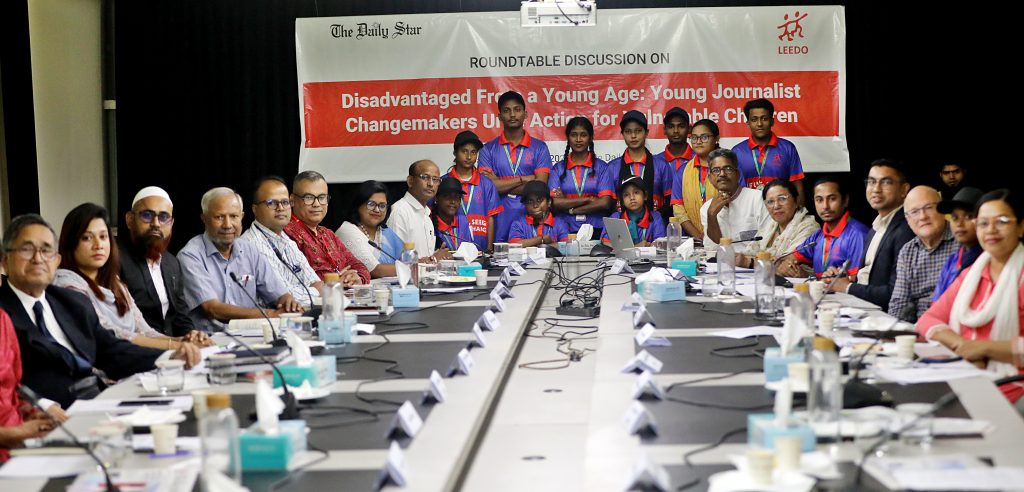
Photo Credit: Tahasin Haque Rayhan
Young Journalist Changemakers Urge Action for Vulnerable Children and Survivors
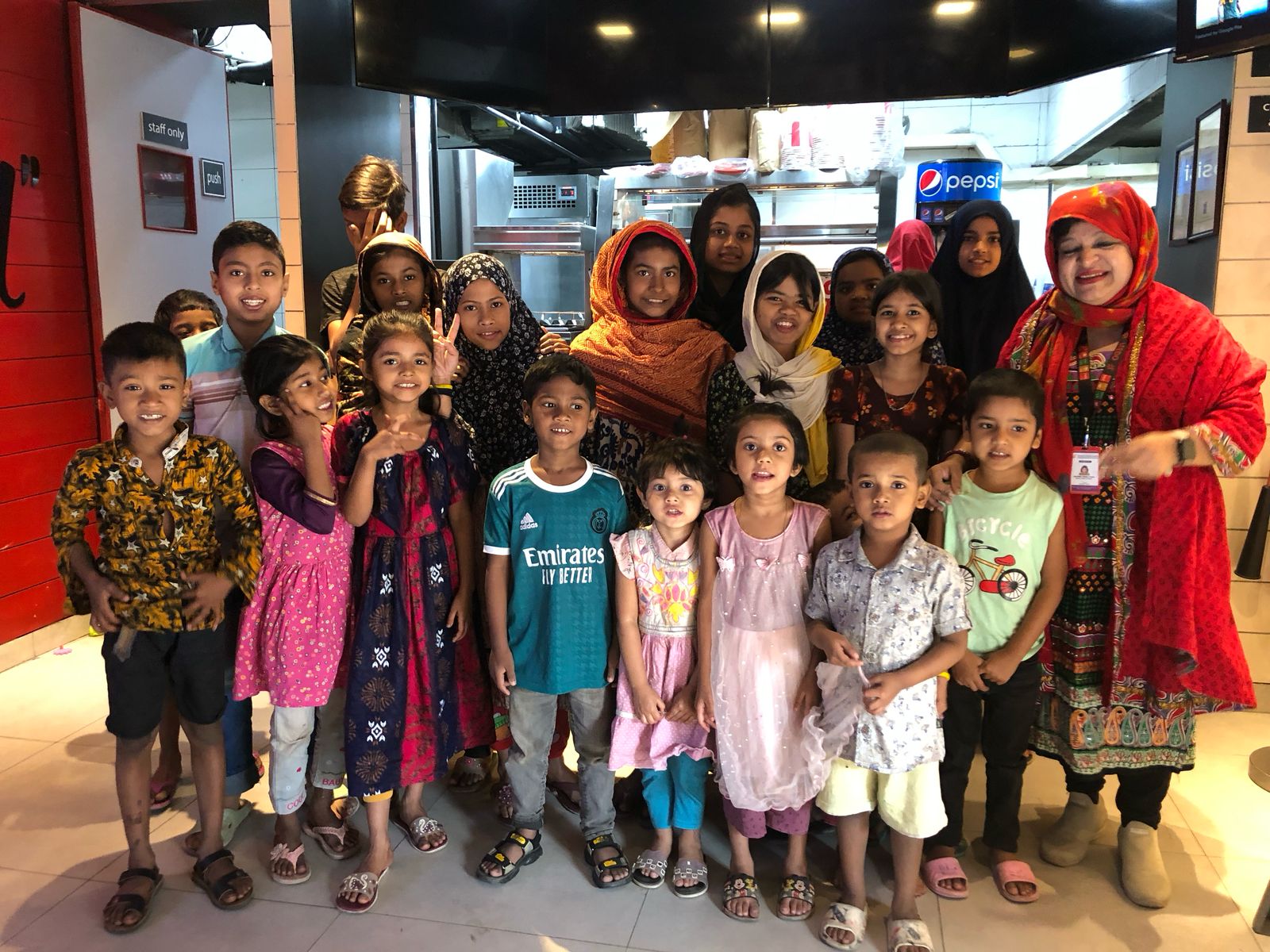
They once roamed the streets with no home to return to. Today, they sit in classrooms and speak with confidence about the rights and dignity every child deserves.
At The Daily Star Centre in Dhaka, these children, now members of LEEDO’s Young Journalist Changemaker Team, took the floor to question policymakers, lawyers, and rights activists on issues that shape their lives. The roundtable discussion, titled “Disadvantaged from a Young Age: Young Journalist Changemakers Urge Action for Vulnerable Children,” was jointly organized by LEEDO (Local Education and Economic Development Organization) and The Daily Star.
The event brought together government officials, educators, and child rights defenders to discuss how to strengthen protection systems for Bangladesh’s most vulnerable children. The session was chaired by Mr. Forhad Hossain, Founder and Executive Director of LEEDO, and attended by Mr. Mahfuz Anam, Editor and Publisher of The Daily Star, who praised the children’s courage. Children Lead the Conversation
Around 12 young journalists, all rescued and rehabilitated by LEEDO, asked thoughtful questions that reflected both their experience and understanding of the world.
Rudra Karmokar, who is preparing for university, asked if there was any legal remedy when a street child faces harassment by police.
Dr. Hasan Reza, Associate Professor at Indiana University’s School of Social Work, responded, “There is no specific legal provision for that, and it remains a gap. But if they can reach higher-ranked officials, action is often taken. We must make that access easier.”
Hasan Ali Musafir, a ninth-grader, raised concern about the use of children in political activities. Arifa Chowdhury Himel, Assistant Director of the National Legal Aid Services, replied, “Children cannot be involved in any unethical or political activity. The National Legal Aid Services provides free legal support in all 64 districts, and any child in need can seek help.”
Ayesha Akter asked Farid Ahmed Molla, Additional Director of the Department of Social Services, whether any 24-hour rescue service exists for children.
He replied, “Our helpline 1098 is active 24 hours, but currently limited to divisional cities. We plan to expand it to every district and upazila soon.”
When Jesmin Akter asked why child protection laws are not implemented properly, Shaheen Anam, Executive Director of Manusher Jonno Foundation, said, “It is a failure of accountability. There is no system to hold officials responsible when they neglect their duties. No child should sleep on the streets. It is inhuman and unacceptable.” She urged the government to establish more shelter homes and drop-in centers.
Empathy, Not Sympathy
Another participant, Tahmina Akther, asked how society can build empathy for street children.
Md. Rezaul Kareem Khokon, Freedom Fighter and Executive Director of Shudha, replied, “It is not about sympathy. It is our duty. Street children have been part of every people’s movement, from the Liberation War to the July uprising. They are not outsiders; they are part of this nation.”
He added, “Even street children pay indirect taxes when buying food or daily necessities. Universities and public institutions run on those taxes. We owe them justice and respect.”
Shared Commitment
The discussion also featured experts including ASM Rahmat Ullah Bhuiyan (Save the Children), Mr. Ruhul Abdin (PARRA), SM Rezaul Karim and Ms. Farjana Fatema (BLAST), Ad. Abdul Momen Chowdhury (Supreme Court), and Barrister Mohshiur Rahman Auvee (UWE International Educational Services).
Panelists agreed that stronger monitoring, better coordination among agencies, and proper implementation of the Children Act 2013 and National Child Policy 2011 are essential to protect vulnerable children.
A New Generation of Voices
The roundtable reaffirmed a powerful message: when children are given a voice, they do not ask for sympathy. They ask for justice, safety, and equality. Their courage and honesty reminded every participant that the future of Bangladesh depends on how the nation treats its youngest citizens.
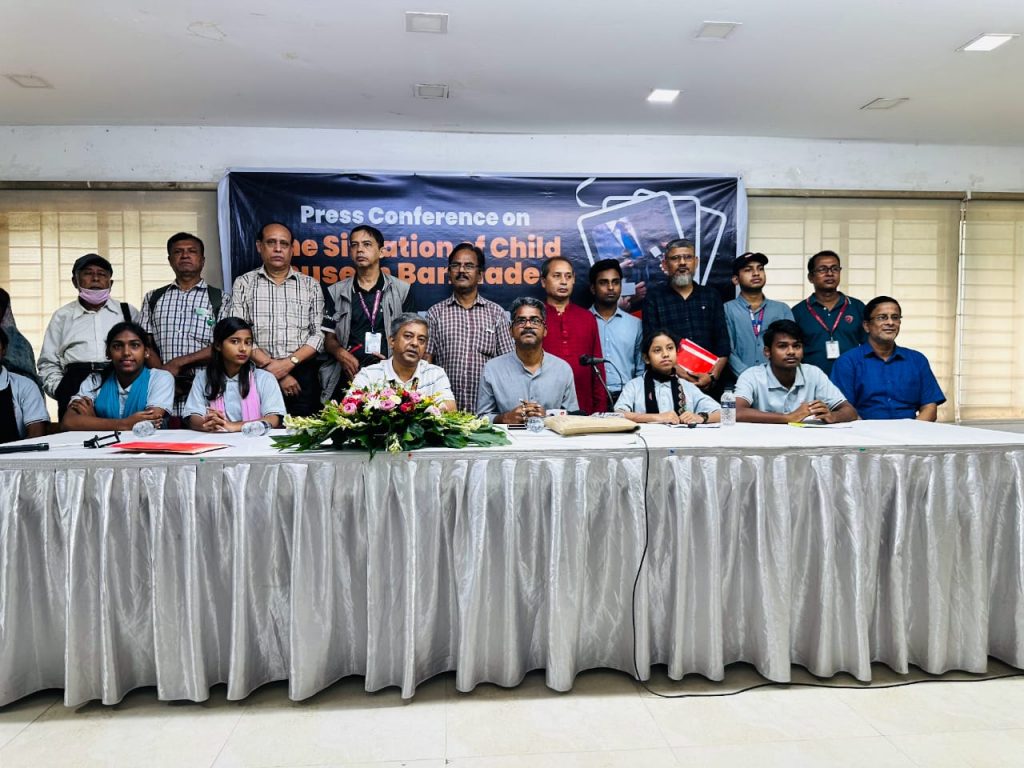
Photo Credit: Tahasin Haque Rayhan
The Young Journalist Changemaker Group Rises Their Voices in Protest and Grievance
On September 29, 2025, the Young Journalist Changemaker Group of LEEDO helped staying alongside took the stage at the National Press Club in Dhaka, giving voice to the pain, injustice, and resilience of children across Bangladesh. They echoed their voices that Child rights are being violated at an alarming scale, and the silence must end. Citing their keynote report, the group revealed that 306 children were victims of sexual abuse between January and July 2025 – a 75% increase from the previous year. The data also revealed that between January and October 2024, at least 482 children were murdered, and 580 faced various forms of abuse, including physical assault, sexual violence, and corporal punishment by teachers. The press conference covered by electronic and print media such as The Daily Star (The Daily Star) Dhaka Tribune (Dhaka Tribune) and Ekattor TV.
The conference was moderated by young journalists and presided by Mr. Forhad Hossain, founder and Executive Director of LEEDO.
The burning questions they raised laid bare systemic failures not just in protection, but in values. The press conference echoed growing concern over rising abuse not only in homes but also in schools, workplaces, and online spaces. Alarming data shows 1 in 3 children face violence online, from cyberbullying to exploitation. Their testimonies cut through the silence. They asked powerful questions:
Why did children still live on the streets?
Why were they trapped in domestic work?
Why was society treating children as disposable?
Why did justice favor wealth or power?
They called for accountability, not sympathy and a society that nurtures, not neglects, its children.
This press conference marked a shift in the national dialogue. For once, children led the conversation and the country listened.
Their words are now a call to action. LEEDO stands firmly with these young changemakers and urges, government, media, civil society, and every citizen to join with them. Listen to them. Act now. Let no child be unheard, unprotected, or forgotten.